In this article we are going to explain what a microcontroller is, an essential component that powers everything from toys to appliances and vehicles. But what exactly is a microcontroller and how does it work? Let's find out!
What is a Microcontroller?
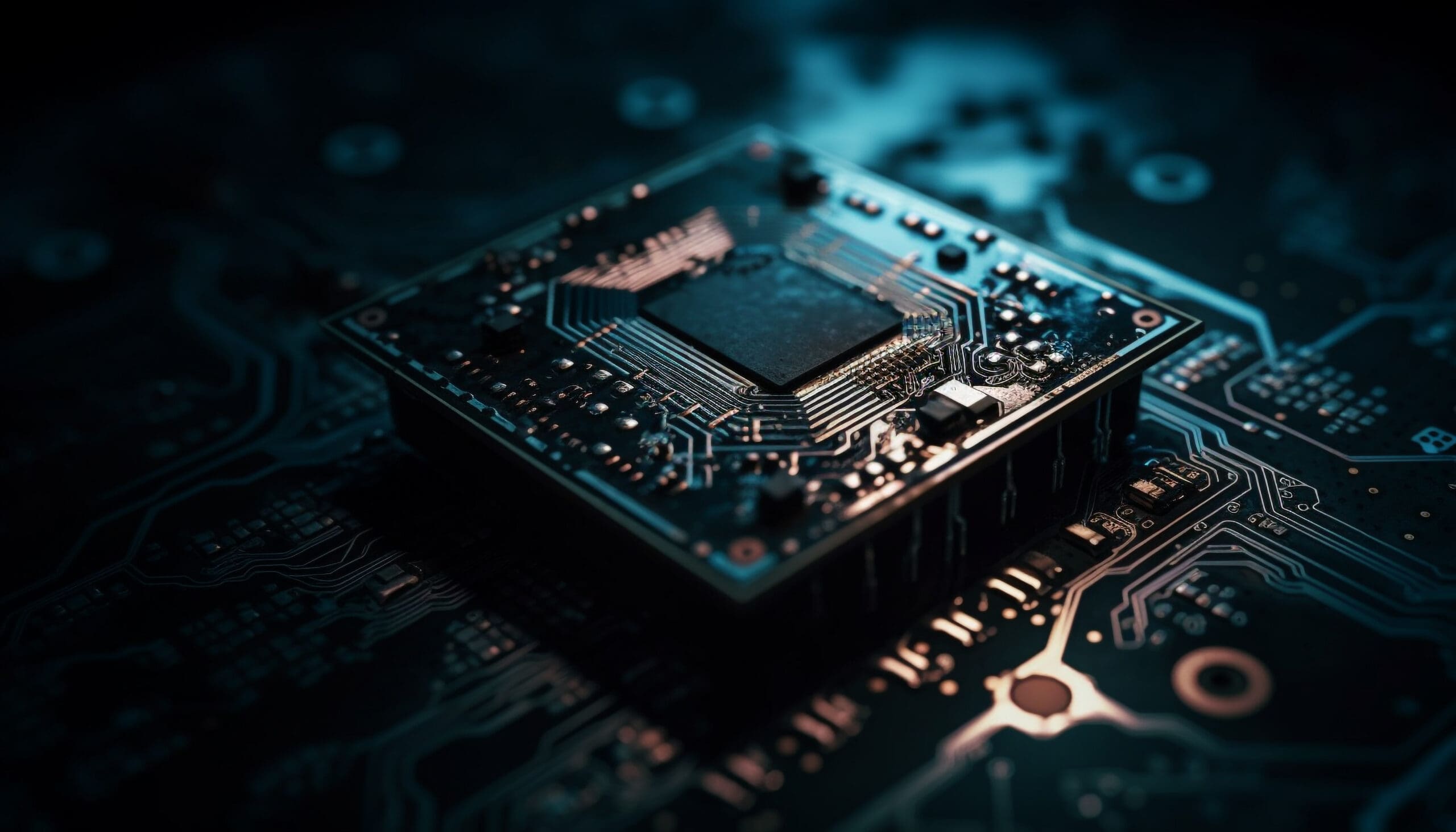
Un microcontroller It is an integrated circuit that works with a processor also called CPU and memory units ROM and RAM. All these parts are interconnected and work with each other within the microcontroller. Microcontrollers are especially useful in applications that require automation, control and monitoring, such as home appliances, motor control systems, embedded systems, medical devices, security systems, electronic toys and a wide range of electronic products. Next we will talk about the characteristics of the microcontroller.
Elements of a Microcontroller
- Processor (CPU): It is the brain of the microcontroller, responsible for executing instructions and performing calculations.
- Memory: It includes read-only memory (ROM) for storing the program and random access memory (RAM) for temporary data.
- Input/Output (I/O) Peripherals: They allow the microcontroller to interact with other components, such as sensors and actuators.
- Timers and Counters: They help carry out tasks in specific time intervals.
- A/D and D/A converters: They allow you to convert analog signals to digital and vice versa.
How Do Microcontrollers Work?
To understand how a microcontroller works, imagine a cooking recipe. The CPU is the chef who follows step-by-step instructions (the program), using ingredients (data) stored in memory to prepare a dish (specific task).
Basic Operating Process
- Programming: A program (recipe) is written in a programming language and loaded into the ROM memory of the microcontroller.
- Execution: The CPU reads the program instructions and performs specified tasks, such as turning on a light or measuring temperature.
- Interaction: It uses I/O peripherals to communicate with the outside world, receiving data from sensors and sending signals to actuators.
Types of Microcontrollers
There are several types of microcontrollers, each suitable for different applications and levels of complexity.
8 Bit Microcontrollers
They are the most basic and are used in simple applications such as remote controls and electronic toys. They have a processor that handles 8 bits of data at a time, making them economical and efficient for simple tasks.
16 Bit Microcontrollers
They offer more power and processing capacity than 8-bit ones. They are used in more complex applications such as audio systems and appliance control. They handle 16 bits of data at a time, allowing for greater precision and speed.
32 Bit Microcontrollers
They are the most advanced and powerful, suitable for applications that require intensive data processing, such as automotive systems and IoT (Internet of Things) devices. They can handle 32 bits of data simultaneously, offering superior performance.
Application Specific Microcontrollers
Designed for specific tasks, these microcontrollers integrate particular functions that make them ideal for specific applications, such as touch screen controllers or medical devices.
How are Programs Written on a Microcontroller?
Programming a microcontroller involves writing a set of instructions that the device must follow to perform specific tasks. This is done using specialized programming languages and development tools.
Common Programming Languages
- Assembly language: A low-level language specific to microcontroller architecture. It offers detailed hardware control, but is complex and difficult to learn.
- C/C++: Easier to use and widely supported high-level languages. They allow more complex programs to be written more efficiently.
- Python: Used in more advanced microcontrollers, especially in prototyping and educational applications.
Development tools
- IDE (Integrated Development Environment): Software that provides all the tools necessary to write, compile and load programs on the microcontroller. Examples include Arduino IDE, MPLAB X for PIC microcontrollers, and Atmel Studio for AVR.
- Compilers: Converts source code written in a high-level language to a language that the microcontroller can understand.
- Scrubbers: Tools that allow you to test and correct errors in the program before loading it into the microcontroller.
Programming Process
- Code Writing: The program is written in the chosen programming language using an IDE.
- Compilation: The code is compiled into a format that the microcontroller can execute.
- Load: The compiled program is loaded into the ROM memory of the microcontroller using specific programming tools.
- Testing and Debugging: The program is tested and bug-fixed to ensure that the microcontroller works as expected.
Applications of Microcontrollers
Microcontrollers are found in a wide variety of devices and systems due to their ability to perform specific tasks efficiently and reliably.
In the home
- Home appliances: From microwaves to washing machines, microcontrollers control functions and optimize performance.
- Security systems: Alarms and security cameras use microcontrollers to process data and respond to events.
In the industry
- Industrial automation: Microcontrollers control machines and processes, improving efficiency and reducing errors.
- Motor Control: In motor control systems, microcontrollers adjust the speed and performance of electric motors.
In the car
- Engine Management Systems: They control fuel injection and ignition to optimize engine performance.
- Entertainment and Navigation Systems: They manage touch screens, radios and GPS navigation systems.
In Consumer Technology
- Mobile phones: They manage various functions such as the touch screen, camera and sensors.
- IoT devices: They allow communication and control of Internet-connected devices, from smart thermostats to fitness watches.
The Importance of Microcontrollers in Modern Technology
Microcontrollers are essential to modern technology due to their ability to perform specific tasks efficiently and with low power consumption. Without them, many of the devices we use every day would not be possible.
Advantages of Microcontrollers
- Energy efficiency: They consume less power than traditional computers, making them ideal for portable devices and low-power applications.
- Effective cost: They are relatively cheap to produce, allowing them to be used in a wide range of products.
- Reliability: Microcontrollers are highly reliable and can operate under extreme conditions, making them suitable for critical applications.
Conclusion
In short, a microcontroller is a component that acts as the brain of many electronic devices. By understanding what a microcontroller is, how it works, and where it is used, we can better appreciate its importance in today's technology.
We hope you liked Revista Española de Electronica, if you have any questions about this article from Revista Española de Electronica, you can contact us through the form on the website.