
Author: Yukiko Date, Product Marketing, Renesas Electronics
Introducing the next generation of MRAM: This high-speed, non-volatile memory is rapidly expanding into embedded systems, industrial equipment, and edge AI applications, where both performance and reliability are critical.
In summary:
- Key features of the new generation of MRAM include non-volatility with high speed, high write resistance, and low power consumption.
- MRAM is no longer a technology of the future: it is used in practice and its range of applications continues to expand as its advantages are more widely recognized.
- Real-world applications of MRAM in environments with external magnetic fields are presented.
MRAM: A new memory technology
MRAM (Magnetoresistive Random Access Memory) is a next-generation memory technology that combines non-volatility with high read and write performance, two characteristics that have traditionally been problematic. Unlike SRAM, which is fast but volatile, or Flash memory, which is non-volatile but relatively slow and has a limited lifespan, MRAM offers both speed and data retention.
By providing high performance, non-volatility, and long lifespan in a single technology, MRAM bridges the gap between fast volatile memory and slower non-volatile memory. This has led to its increasing adoption in embedded, industrial, edge AI, IoT, and mission-critical systems, where performance and reliability are paramount. Market research reflects this trend: according to Mordor Intelligence, the global MRAM market is projected to grow at a compound annual growth rate (CAGR) of 32,72% between 2026 and 2031, reaching $18.240 billion by 2031.
How does MRAM work? It stores data using magnetism.
Unlike conventional memory that stores data as an electrical charge, MRAM stores information using magnetic properties. While SRAM achieves very high speeds by retaining data electrically—losing it completely when power is interrupted—MRAM stores data according to the direction of magnetization, ensuring non-volatile storage even without power.
An MRAM cell is built around a magnetic tunnel junction (MTJ), which consists of a fixed magnetic layer and a free layer separated by a thin tunnel barrier. Changes in the magnetization alignment between these layers result in different resistance states, which are read as a digital "0" or "1". Because data is stored magnetically rather than electrically, MRAM can reliably retain data through power cycles (Figure 1).
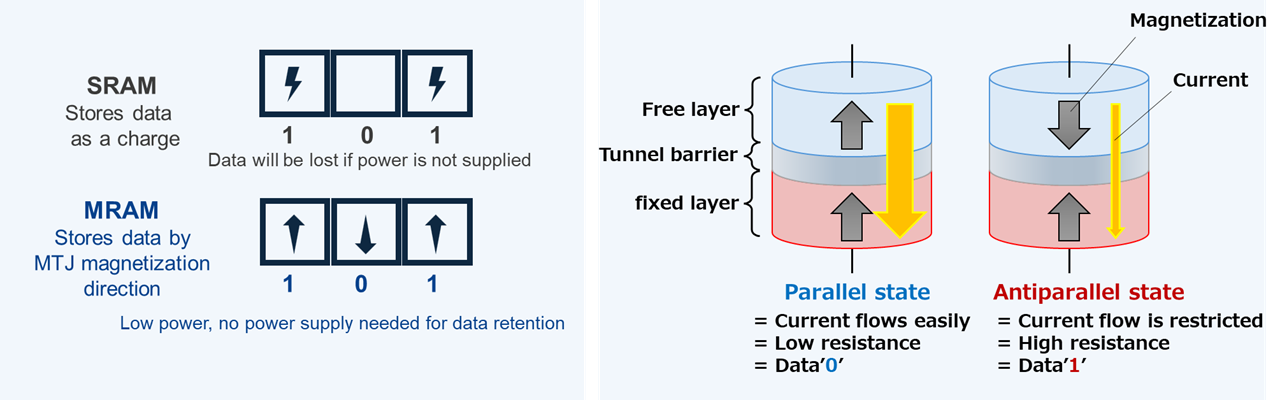
Figure 1. MRAM Operation
Key features of MRAM
Combination of non-volatility and high speed
Compared to microcontrollers using integrated flash memory, MRAM-based microcontrollers (such as the RA8P1) offer significantly faster write performance. Write times are reduced by approximately 98%, significantly improving system performance for applications requiring frequent memory updates, such as firmware updates, data logging, and parameter storage.
High resistance to writing
MRAM is ideal for repeated write operations because the magnetization reversal has no fundamental limit on the number of cycles. While flash memory typically supports only several thousand to tens of thousands of write/erase cycles, MRAM offers high endurance for both code and data storage, making it suitable for systems that require frequent data updates.
Low energy consumption
MRAM retains data without consuming power, making it suitable for low-power systems. Furthermore, the RA8P1 microcontroller achieves approximately 47% lower operating current compared to conventional products under equivalent conditions. By combining high speed with low power consumption, MRAM memory enables high-performance and energy-efficient system designs (Figure 2).
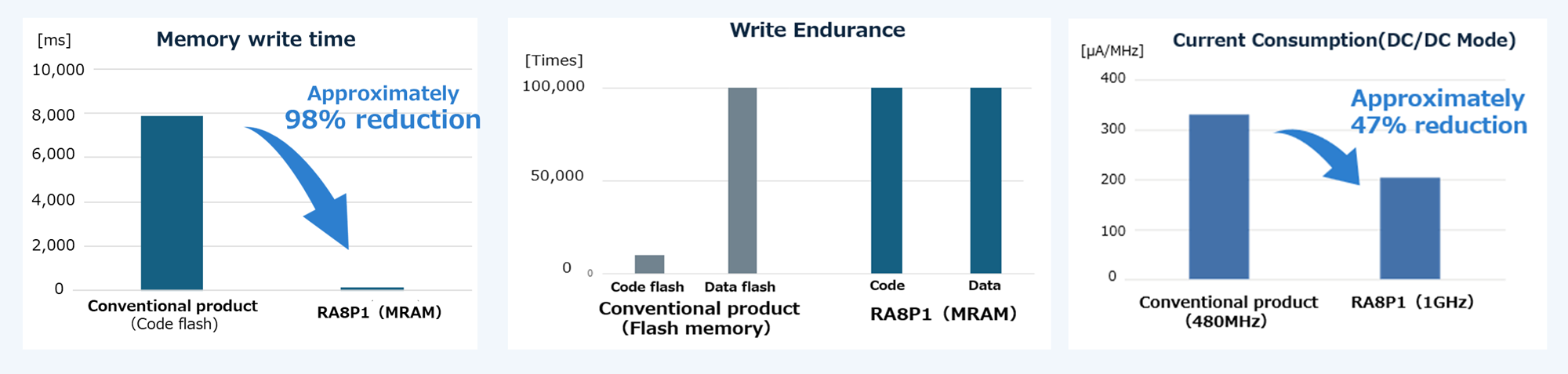
Figure 2. Key features of the MRAM
Key applications of MRAM
MRAM is already in use in practice and its range of applications continues to expand as its advantages become more widely recognized.
Embedded, IoT and industrial systems
MRAM is increasingly used for storing configuration data, registers, and firmware in embedded, IoT, and industrial systems. Its byte-level write capability, fast access, and reliable data retention during power outages make it ideal for applications requiring frequent updates and stable operation, even at high temperatures and under continuous use.
Storage
MRAM is also increasingly used in storage-related applications, taking advantage of its high write resistance and high tolerance to unexpected power losses.
Typical examples include cache memory in SSDs, state management, and register storage. In workloads requiring frequent, high-speed write operations, MRAM's features offer distinct advantages over conventional memory technologies.
Aerospace
In aerospace applications, memory devices are often exposed to harsh environments, including intense radiation, where conventional memory technologies can be vulnerable.
MRAM memory has demonstrated relatively stable operation under these conditions, leading to its use in applications such as satellite attitude control systems and onboard control computers. Its resistance to performance degradation, even with frequent write operations, is a key reason why it is valued in this field.
Applicability of MRAM memory in environments with external magnetic fields
- MRAM memory tolerance to external magnetic fields: Renesas Electronics defines reference limits for the magnetic flux density on the surface of the microcontroller (MCU) to ensure the safe use of MRAM-based microcontrollers:
- Operation (Write/Read): up to 200 G
- Storage/Idle/Off: up to 500 GB
Very intense magnetic fields that exceed the microcontroller's magnetic immunity specification can affect stored data, since MRAM memory stores data using the magnetic state of a magnetic tunnel junction (MTJ).
This fact sometimes leads to the assumption that "MRAM memory cannot be used near motors or inductors." However, in practice, these concerns are usually unnecessary for typical embedded and industrial system designs.
- Magnetic flux density intensity for motors and inductors: To assess whether MRAM-based microcontrollers can be safely used in real-world application environments, Renesas Electronics performed magnetic flux density measurements around magnetic flux-generating components such as motors and inductors.
Conclusion 1. The magnetic flux density around the motors is relatively
Low. Measurements taken on small and large permanent magnet synchronous motors (PMSMs) showed that the motor housing acts as a magnetic shield, resulting in magnetic fields outside the housing of only a few gauss or less, even during operation. These very low magnetic fields have a negligible impact on the operation and data retention of the MRAM.
Housings made of steel or other magnetic materials further enhance this shielding effect by suppressing flux leakage.
Based on these findings, MRAM can be considered suitable for use in typical system configurations, such as motor control equipment, inverters, and industrial PLCs.
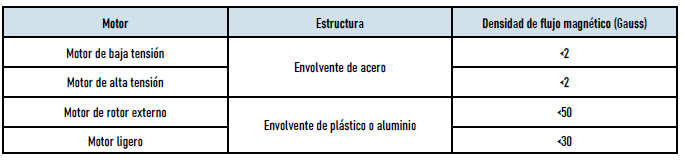
Table 1. Magnetic flux density around the motors
Conclusion 2: Measurements of inductors used in power supply circuits showed that, even under high current conditions, most of the magnetic flux is concentrated within the core. Consequently, the magnetic flux density escaping from the component is very small.
For example, measurements on an inductor with gaps confirmed that the leakage magnetic flux density remained below approximately 10 gauss, well below levels that would affect MRAM memory operation or data retention.
Further testing of a high-current power inductor (Sagami Elec, CVK2522H-5R4M) showed that, even at 100 A, the magnetic flux density drops to 200 gauss or less with only a few millimeters of separation. Therefore, unless an inductor and an MRAM-based microcontroller are placed extremely close together on the printed circuit board, it is unlikely that the magnetic flux density will exceed the MRAM's tolerance.
Under the same test conditions, an inductor with a ferrite core of equivalent size and inductance showed an even faster decrease, reaching a magnetic flux density of 200 gauss or less with a separation of approximately 0,5 mm.
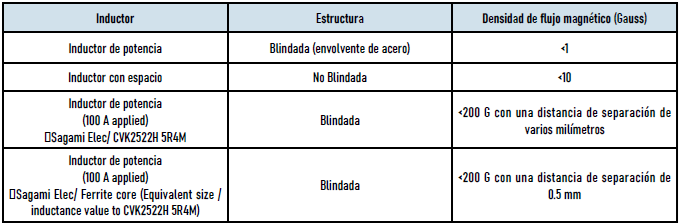
Table 2. Magnetic flux density around the inductors
- Relative location of magnetic field sources and MCUs in real-world applications: Based on real-world application configurations, Renesas Electronics confirmed the typical physical location of magnetic field sources, such as motors, inductors, and permanent magnets, relative to control MCUs.
In most practical applications, the magnetic field sources and the MCU are separated by a sufficient distance due to mechanical and structural design limitations. As a result, the influence of magnetic flux density on the MCU can be considered negligible in practice.
In common industrial and consumer products, such as air conditioners, washing machines, and refrigerators, the drive components, including motors, fans, and pumps, are physically separated from the control PCB that houses the MCU (Figure 3).
Consequently, even if there is a localized magnetic flux density near motors or power circuits, the magnetic flux density decreases rapidly with distance and does not reach levels that would affect the operation of the MRAM.
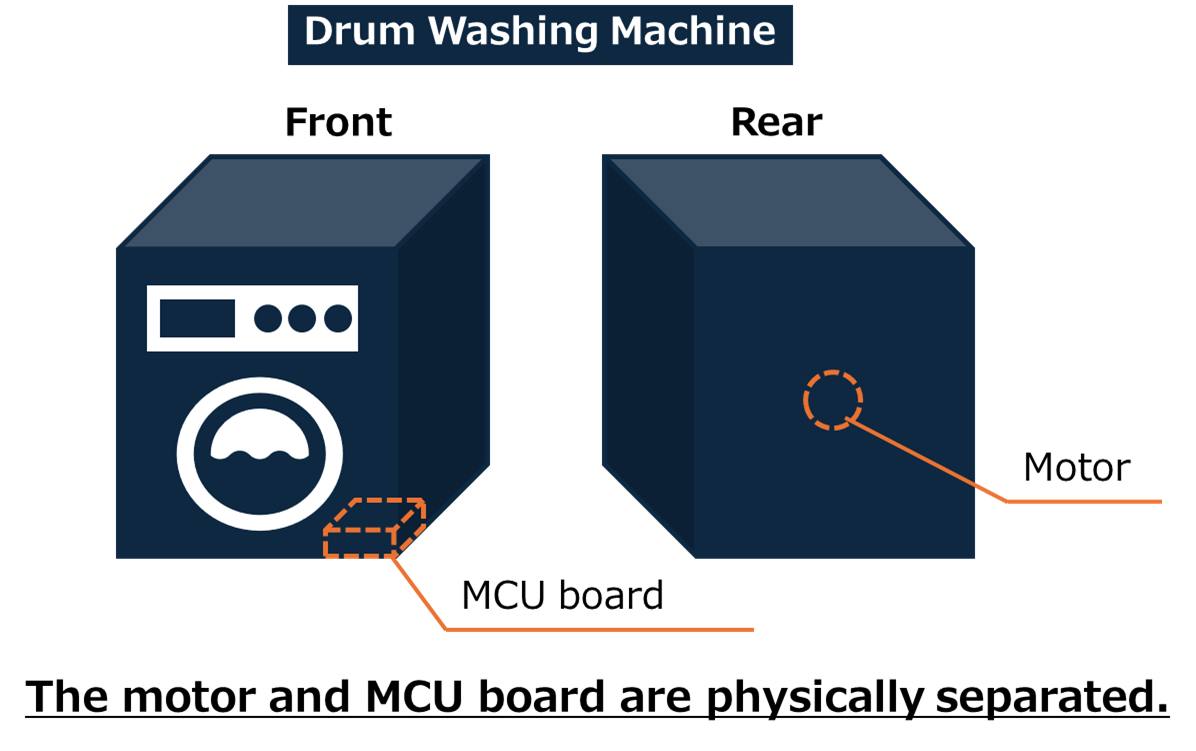
Figure 3. Location of the microcontroller and motor in a drum washing machine.
In power electronics, such as power conditioners, server power supplies, and general-purpose inverters, several components can act as potential sources of magnetic fields, including:
- Large inductors
- Transformers
- High-current tracks
However, in typical system designs, these components are physically separated from the control circuits. The microcontroller is usually located several centimeters away from the main power stage.
Example: power inductors
Sagami Elec performed a magnetic field analysis simulation to evaluate the magnetic leakage flux around a power inductor under high current conditions. The magnetic field distribution around the inductor was analyzed for high DC currents.
Models analyzed
- Model No. 1: Sagami Elec. Power Inductor CVK2522H-5R4M
– Permeability (μ): 40
– Dimensions: 20 × 25 × 22,5 mm
– Inductance (L): 5,4 µH
- Model No. 2: Sagami Elec. Ferrite Core Inductor (equivalent in size and inductance to CVK2522H-5R4M)
– Permeability (μ): 3000
– Dimensions: 26,9 × 16,5 × 22,3 mm
– Inductance (L): 5,4 µH
Simulation conditions
- Current
or 100 A DC (corresponding to an inductance variation of -30% with respect to the initial value)
- PCB configuration
Plate size: 75 × 75 × 1 mm
Simulation results
No. 1 CVK2522H-5R4M
- XY Plane: A separation of approximately 3,0 mm is sufficient to reduce the magnetic flux density below 200 G.
- YZ plane: A separation of approximately 1,5 mm is sufficient for 200 G.
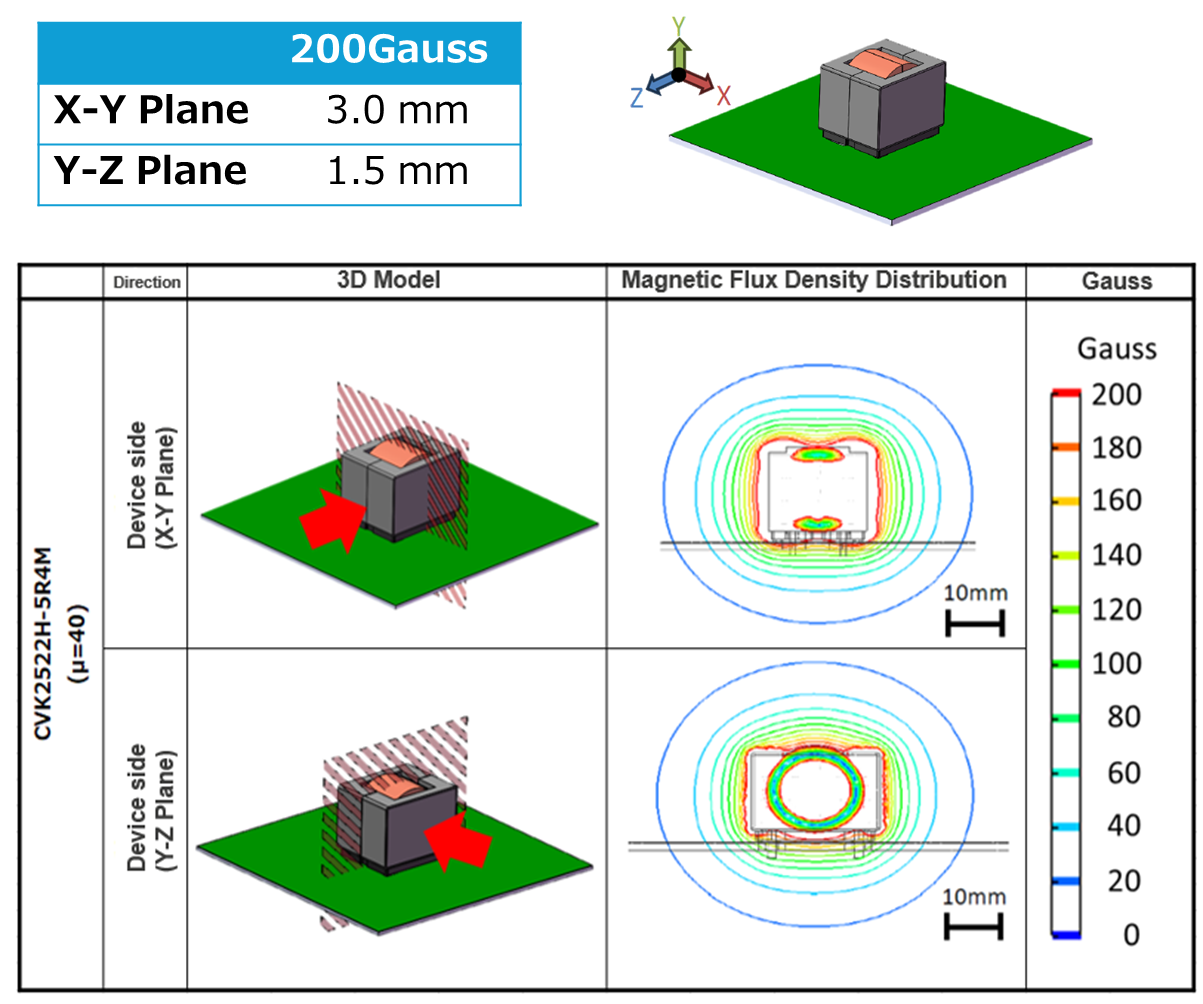
Figure 4. Simulation results of the magnetic flux density of the CVK2522H-5R4M inductor
No. 2 Inductor with ferrite core
- X-Y plane: The magnetic flux density was much lower than 200 G.
- Y-Z plane: A separation of approximately 0,5 mm is sufficient to reduce the magnetic flux density below 200 G.
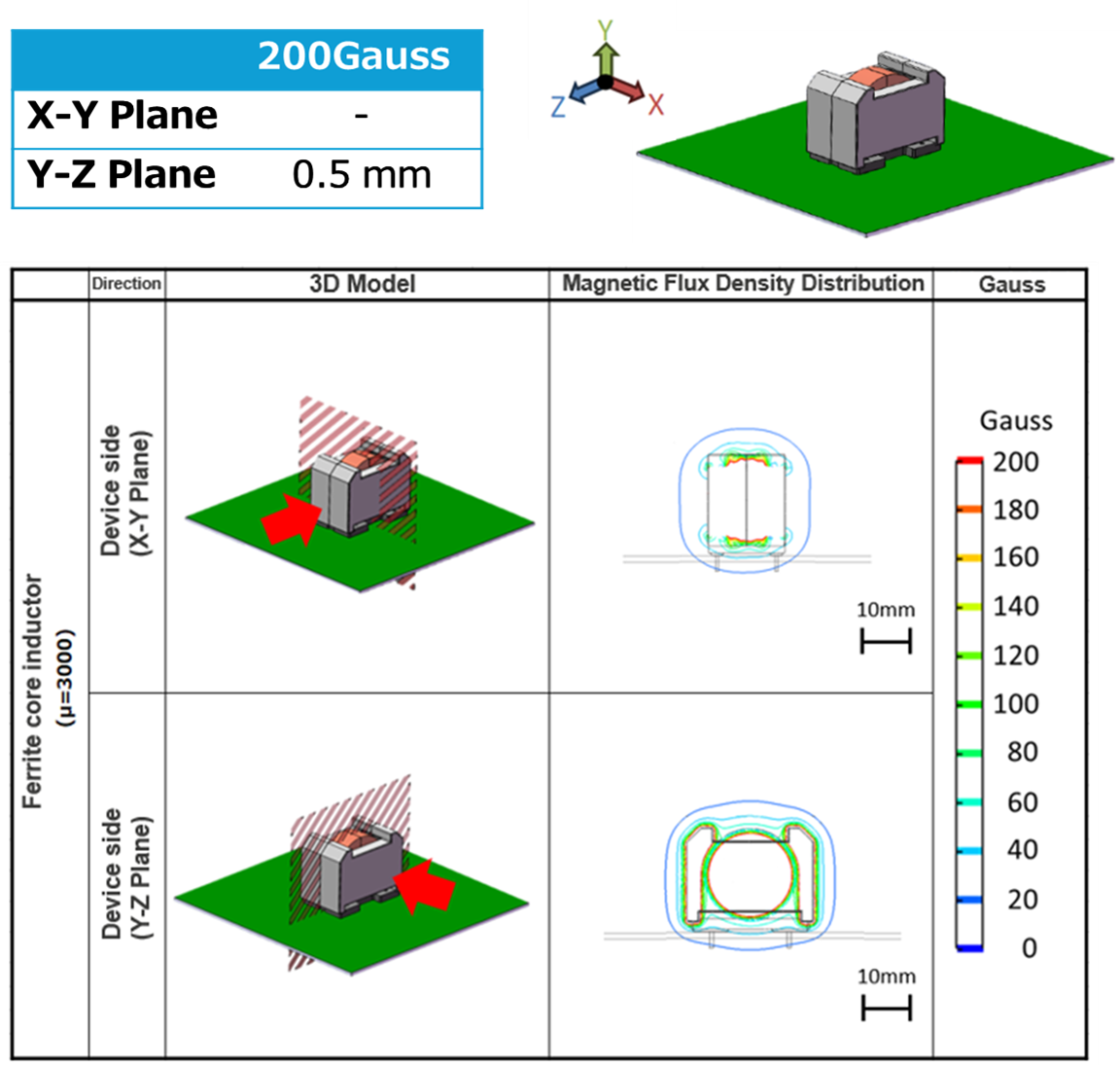
Figure 5. Simulation results of the magnetic flux density of an inductor with a ferrite core
Evaluation results
- Even under high current conditions, the inductor core confines most of the magnetic flux internally.
- The distribution of leakage magnetic flux depends on the permeability of the material (μ); materials with higher μ tend to confine the magnetic flux within the core.
- The magnetic flux density that leaks into the surrounding area is limited and is kept well below levels that would affect the operation of the MRAM.
These results provide an example of data that support a practical design guideline: when inductors and MRAM-based microcontrollers are placed at a suitable distance in typical power supply circuits, the influence of magnetic fields can be sufficiently mitigated.
Although magnetic fields are concentrated near the inductor itself, the magnetic flux density decreases rapidly with distance, so the impact on surrounding circuits is limited.
Conclusion
MRAM uniquely combines high-speed operation with non-volatility, capabilities difficult to achieve simultaneously with conventional memory technologies. Thanks to continuous manufacturing advancements and increased ecosystem support, MRAM is expected to play an increasingly important role in future system designs.
(Reference: Mordor Intelligence, Magnetoresistive RAM (MRAM) Memory Market: Growth Trends and Forecast, https://www.mordorintelligence.com/industry-reports/magneto-resistive-ram-market)